The first line
A curve is drawn, then reconsidered around a hand, a neckline or the movement of a wrist. The useful question is how the shape belongs to the person.
Luma Atelier
At the bench
A stone needs room for light, a secure seat and a setting that feels comfortable. Those practical decisions shape the first drawing and every detail that follows.
Read our notes on stone settings, polished edges and the balance between a delicate silhouette and everyday wear. Different materials call for different care.
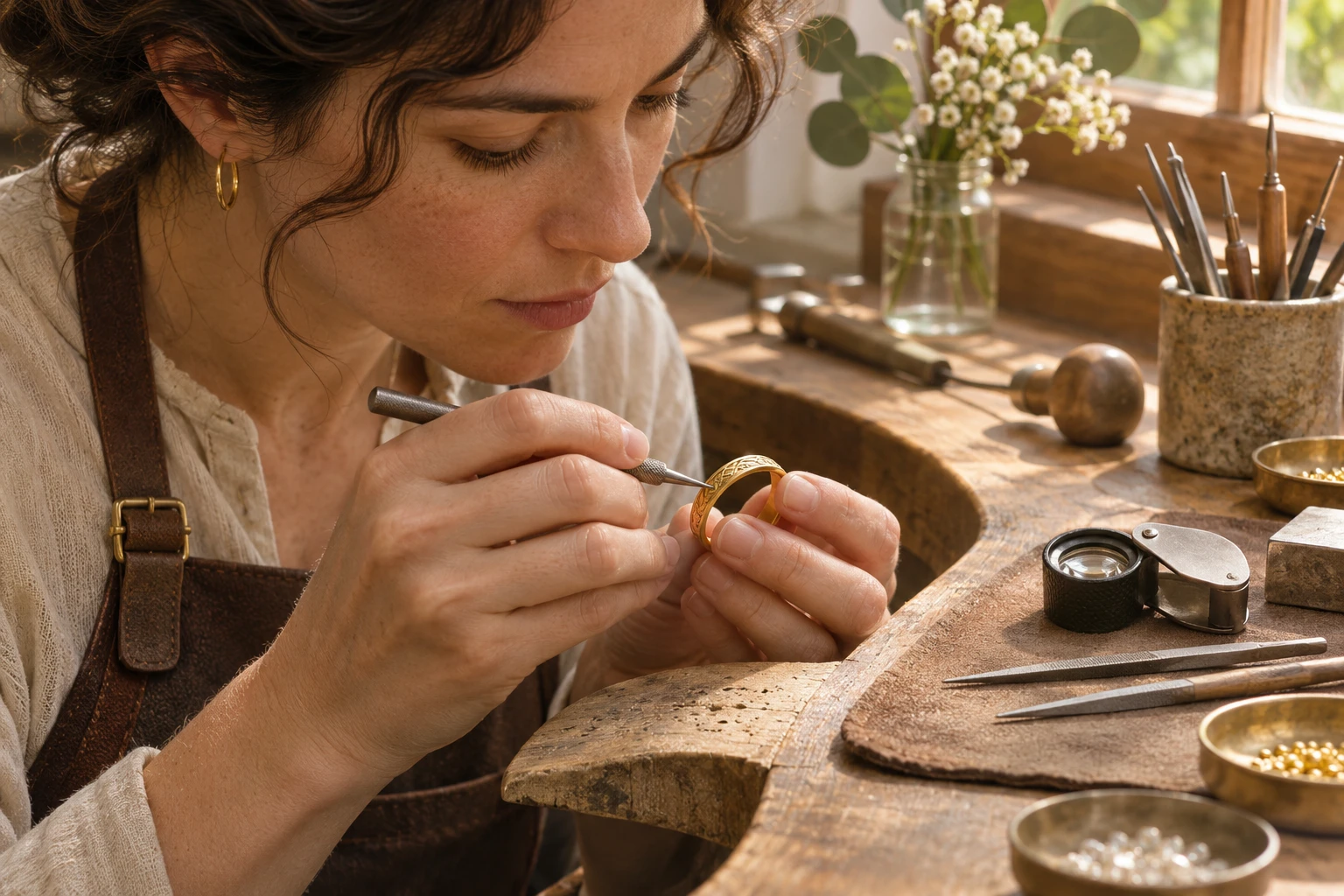
A curve is drawn, then reconsidered around a hand, a neckline or the movement of a wrist. The useful question is how the shape belongs to the person.
Metal and stone are considered together. The setting gives the stone a place without losing the line that made the design worth exploring.
An edge, a polished plane and a quieter interior surface catch light differently. Their relationship gives the form its clarity.
A measurement, a care note and a clear description help a piece find a place within the ordinary rituals of getting dressed and putting things away.
Metal finish, stone and size are part of a specific selection. In this collection, each available combination has an individual SKU and an illustrative inventory count. A photograph shows the form; the accompanying description makes the chosen materials explicit.
A particular sleeve, a familiar necklace length or a ring that fits comfortably can be the beginning of a more useful comparison. Start with the thing you know, then ask how the new piece might sit beside it.
All atelier scenes and jewellery photographs are original synthetic images. The collection does not offer a real manufacturing history, hallmark, gemstone certificate or warranty. It presents a considered design language and a complete local shopping experience.
Start a conversation ↗